Pioneer Member
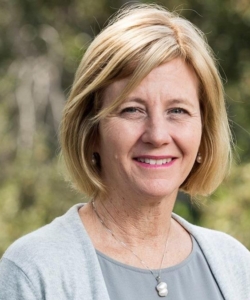
Julia Bailey-Serres
DONORS
Alex Borowsky
Siobhan Brady
Xuemei Chen
Sean Cutler
Mark Estelle
Wolf Frommer
Takeshi Fukao
Jeoffrey George
Thomas Girke
Mary Lou Guerinot
Hailing Jin
Kaisa Kajala
Brian Larkns
Travis Lee
Susan McCouch
Natasha Raikhel
Carolyn Rasmussen
Rashmi Sasidharan
Julian Schroeder
Neelima Sinha
Patricia Springer
Bing Yang
Zhenbiao Yang
Anonymous Donors
TESTIMONIALS
Siobhan Brady – Julia has been a role model, valued collaborator and friend for the last 20 years. From her expertise have come discoveries and the development of tools that transformed our understanding of cell type-resolution and changes in gene expression in response to abiotic stresses in a physiologically-relevant manner. Her research is directly applicable to agriculture and is actively translated. She is a vocal proponent of women in science at a variety of career levels and is a loyal and continued contributor to our plant biology community in many ways.
Xuemei Chen – It was my honor to have had been Julia’s colleague at UC Riverside for 17 years. Her efforts towards CEPCEB and NSF graduate training programs enhanced plant biology at UC Riverside.
Joanne Chory – I am honored to support Julia Bailey-Serres as an ASPB Pioneer. At the University of California, Riverside, she has distinguished herself as a leader in plant biology by integrating cutting-edge technology with fundamental biological research. Her innovative work has advanced our understanding of plant resilience and adaptation to environmental stresses, which is crucial in addressing global challenges like climate change and food security. Beyond her scientific achievements, Professor Bailey-Serres is a role model for young scientists. Her dedication to mentoring and inspiring students has fostered a new generation of researchers who are making their own significant contributions. Her ability to blend technological prowess with biological insight exemplifies the pioneering spirit this recognition seeks to honor. Julia’s contributions to plant biology and her commitment to education make her a deserving ASPB Pioneer. Her work will undoubtedly influence the field for years to come.
Sean Cutler – The breadth and impact of Julia’s work and career continue to inspire me. Julia is unquestionably a pioneer who has left an indelible imprint on plant biology.
Wolf Frommer – Julia is a wonderful person and an amazing scientist who is a pioneer in uncovering the secrets of how plants deal with flooding (anaerobiosis). She is a key contributor for finding solutions to submergence tolerance for subsistance farmers. She made seminal contributions in many other areas, in particular the regulation of translation, as well as generating tools that enabled us to use mRNA from polysomes as a proxy for protein production on a genome-wide scale. She has served the plant science community in many selfless ways.
Julia has made many seminal contributions to science, and at all levels, including a lot for the scientific community. Her milestone work on the response of plants to anaerobiosis is highly important in the context of developing genetic and biotechnological approaches to protect crop yield from flooding; here her contributions to understanding and promoting the use of the SUB1A protein have a major impact on agriculture. She also made fundamental contributions to our understanding of the regulation at the interface of RNA and protein production, including the systematic analysis of RNAs that are more likely translated (translatomes). The space is too small to honor all her major contributions and the ones to come.
Thomas Girke – Julia is a highly recognized innovator who has pushed the boundaries in both basic and applied plant sciences. Her remarkable contributions as an educator and mentor have shaped the careers of numerous undergraduate and graduate students, postdocs, and other researchers. I am honored to have Julia as a colleague and friend. At her home institution, Julia initiated and led several innovative NSF-funded training programs, creating new opportunities for large cohorts of graduate students and having a long-term impact on their training. Beyond her institution, Julia has made exceptional contributions to various organizations within the plant science community. She has held many leadership roles in the ASPB and served as an editor for several journals, including Plant Physiology and PNAS. Julia’s selfless contributions have been recognized with several awards. I cannot think of anyone more deserving to be recognized as an ASPB Pioneer than Julia.
Mary Lou Guerinot – Julia is an amazing plant biologist. Her work on how plants respond to environmental stresses has impacted millions of people who depend on rice as a dietary staple. I count myself lucky to have Julia as a colleague and friend.
Hailing Jin – I am continually inspired by Julia’s exceptional expertise in RNA biology and plant molecular biology. Her dedication to advancing our understanding of plant stress responses is truly remarkable. Her dedication to mentoring students and researchers profoundly impacted my approach to teaching. Julia is truly a role model for me, and she serves as a powerful example of what can be achieved through passion and perseverance.
Brian Larkins – Julia has had an outstanding career, not only as a scientist who contributed to our knowledge of plant molecular genetics and the topic of protein synthesis and post-transcriptional regulation, but in particular to understanding anerobic respiration in maize and rice. She has provided notable leadership to her profession and mentorship to her students and colleagues. She certainly merits recognition as a Pioneer of ASPB.
Susan McCouch – Julia’s work focuses on understanding the genetic and regulatory networks underlying plant responses to abiotic stress, particularly submergence and hypoxia, and it provides an outstanding example of translational plant biology with its direct links to applications in agriculture. She is a highly esteemed and much-loved member of the rice community, where she is best known for her research exploring the mechanisms underlying submergence tolerance. Her papers describing the functional significance of the sub1 gene are accessible and beautifully written. With the sub1 gene now deployed in over a dozen rice varieties grown on millions of hectares of flood-prone land in Asia and Africa, her work highlights both the excitement of scientific discovery and its impact on breeders’ efforts to stabilize yield in farmers’ fields. She is an outstanding scientist, a wonderful collaborator, and an active member of the plant biology community, with deep ties to international efforts to develop crop varieties that withstand climate change.
Natasha Raikhel – I am thrilled to see Julia among the ASPB Pioneers! You truly deserve this recognition many times over. Your forward-looking research with significant practical implications and your exemplary leadership at the university and nationwide are highly commendable. With warmest wishes for your continued success in science and happiness in life! Your friend, Natasha
Carolyn Rasmussen – Not only is Julia Bailey-Serres a world renowned scientist working on important and relevant problems in plant biology, she also spearheaded important initiatives that supported our graduate students and has played a large role in the ASPB community.
Julian Schroeder – Julia is a pioneer in plant molecular biology, particularly in understanding transcriptional and translation regulation in flooding tolerant rice.
Bing Yang – Dr. Bailey-Serres is a great scientist and an excellent collaborator. I am grateful for her kind support to my research program and encouragement for my career development.