Pioneer Member
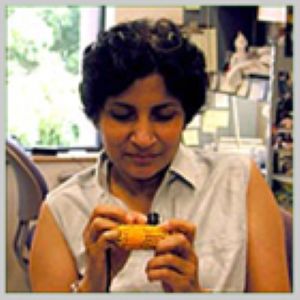
Neelima Sinha
DONORS
Amos Alakonya
Siobhan Brady
Anne Britt
Jessica Budke
Wynnelena Canio
Connie Champagne
Rakefet David-Schwartz
Helena Garcês
Mikhail Geyfman
Andrew Groover & Suzanne Gerttula
Lauren Headland
Yasunori Ichihashi
Min-Yao Jhu
Muhammad Kamran
Toby Kellogg
Sharon Kessler
Minsung Kim
Seisuke Kimura
Daniel Koenig
Ravi Kumar
Siyu Li
Ciera Martinez
Hokuto Nakayama
Naomi Nakayama
Prakash Narain
Thinh Pham
Roopa Rai
Aashish Ranjan
Steven Runo
Sumer Seiki
Savita Sinha
Bhaskar Sinha
Brad Townsley
Naoyuki Uchida
Anonymous Donors
TESTIMONIALS
Siobhan Brady – Neelima is a leader in evolutionary developmental biology, with exceptional knowledge of the diversity of the Earth’s plant form and function. She is an involved and enthusiastic mentor of high school students, undergraduates, graduate students, postdocs and faculty members, women in plant biology – providing direct and supportive help, and being an integral part of many people’s career advancement. Finally, she has served the community in myriad ways. With respect to the plant biology community and ASPB, via her editorial contributions to Plant Physiology.
Connie Champagne – I was inspired to reach out to Neelima when I was a graduate student on the verge of completing my PhD. Throughout the course of my graduate degree, every time I read one of her evo-devo publications, I thought that her work was incredibly interesting. When I contacted her about the possibility of doing a postdoc in her lab, she immediately encouraged me to apply for an Esau Fellowship. I followed her guidance, and this changed my life completely. Neelima welcomed me into her lab and supported my growth as a scientist. She always looked for opportunities for me to advance in my career and then supported me as I pursued my goals. She ensured that research opportunities were broadly available to so many budding young scientists, including those from groups not historically included in science. In addition to being a creative and innovative scientist, she is a caring human being. Thank you, Neelima, for your guidance, patience, and kindness.
Yasunori Ichihashi – Joining Neelima Sinha’s lab at UC Davis as my first position after completing my Ph.D. was one of the most important turning points in my life. She helped me grow not only as a scientist, but also as a person.
One of my strongest memories is writing my BOP paper with Neelima. She spent countless hours working with me one-on-one, patiently teaching me how to think critically, build a scientific story, and write clearly. Those lessons continue to guide me every time I write a manuscript or mentor my own students.
Ironically, those years were also the most difficult period of my career. My research was slow to progress, I struggled to obtain fellowships, and I lacked confidence because of my limited English. What made the difference was the supportive environment Neelima created. She believed in people, encouraged them through difficult times, and built a lab where colleagues genuinely cared for one another.
Now that I lead my own laboratory at RIKEN, I realize how much her mentoring style has influenced me. I often find myself trying to create the same kind of environment that I experienced in the Sinha lab—one where people enjoy both science and life.
Neelima’s greatest legacies are not only her remarkable scientific contributions, but also the many scientists she has inspired and shaped. I am deeply grateful to be one of them.
Min-Yao Jhu – Neelima has had a profound influence on my development as a plant biologist. Under her mentorship at UC Davis, I developed my research on Cuscuta and became fascinated by the developmental biology of plant–plant interactions, particularly how parasitic plants initiate and form the haustorium. This work established an intellectual foundation that continues to shape the questions I pursue today.
Beyond the specific research system, Neelima taught me how to think about plant development: to look carefully at developmental phenotypes, ask fundamental biological questions, and follow unexpected observations. She is a supportive mentor who genuinely cares about the career development of her trainees. She encouraged me to develop my own ideas and scientific identity while always providing thoughtful guidance and support.
Her mentorship has continued well beyond my time at UC Davis. As my research has expanded into symbiosis, spatial biology, and comparative studies of plant organogenesis, I continue to draw on the scientific perspective and independence that I developed in her lab. I am deeply grateful for Neelima’s mentorship, her continued support, and the lasting impact she has had on my career and on the way I approach plant biology.
Sharon Kessler – Neelima has made lasting contributions to the plant biology community through her innovative science, selfless mentorship, and community involvement. Her pioneering work led to great advances in our understanding of the mechanisms controlling leaf development and evolution. Neelima’s enthusiasm is infectious and she truly cares about helping others to succeed in their careers. As my PhD advisor, Neelima taught me to go after the interesting questions that arise from unexpected results and to never be afraid to try new techniques. It has been great to see this philosophy carried forward by the many scientists she has mentored.
Minsung Kim – I am delighted to support Professor Neelima Sinha’s recognition as an Pioneer Member of ASPB. Neelima has had an extraordinary impact on plant biology through ground breaking research, inspiring mentorship, and charismatic leadership within the scientific community.
Neelima’s pioneering work on plant development and evolution has fundamentally advanced our understanding of the genetic and evolutionary basis of plant forms, especially leaves. By integrating genetics, genomics, and evolutionary biology, she has addressed important questions on leaf development and evolution while opening exciting new avenues for evo devo research. Her contributions continue to influence scientists across many areas of plant biology.
In addition to her scientific accomplishments, Neelima is an exceptional mentor and colleague. She is deeply committed to supporting students and early-career researchers, encouraging them to think creatively and pursue ambitious ideas, as well as nurturing them with much warm kindness. Her enthusiasm for plant science is infectious, and she has helped shape the careers of many successful plant biologists. Many of her students have become leading plant scientists.
Neelima has also made lasting contributions through service to the plant science community. She is a thoughtful collaborator, an outstanding leader, and a strong advocate for an inclusive and supportive scientific environment.
Neelima’s scientific vision, lasting impact, and dedication to advancing plant biology make her an ideal ASPB Pioneer Member. I give her my strongest endorsement and believe that she truly embodies the spirit of this recognition.
Daniel Koenig – Neelima was my Ph.D. supervisor, and she had a profound impact on my life and career. She was an excellent mentor in the traditional ways, guiding my research questions, pushing me to overcome challenges and reach my potential, and helping me make career decisions. But I thought I might highlight a few of her unique characteristics that I try to emulate in my own group.
First, Neelima always emphasized facilitating interactions between her trainees and other senior scientists. When Neelima thought that another faculty member’s expertise might be useful for my project, she would push me to meet with them on my own. When visiting professors came from other institutions, she would use her meeting time to invite graduate students and postdoctoral scholars to present their work. This approach greatly reduced the inhibition I had to interact with senior scientists and helped me build a scientific network that even now I can pass on to my own trainees.
Second, across career stages, Neelima brought together such an amazingly diverse group of scientists and students. It was clear that she valued the opportunities she gave to hundreds of undergraduates from across cultures and economic backgrounds just as much as she valued training senior scientists who would go on to become professors (and this was still a lot!). Neelima brought this group together as a family. She welcomed us all into her home, where we shared delicious food and tea at lab potlucks, with everyone from undergraduates to seminar speakers sitting on the ground in her living room, sharing joyful laughter.
And finally, Neelima inspired me with the challenges she overcame in life to still become an incredible scientist. Shortly before I joined the lab, Neelima’s husband died, leaving her alone to support and raise her son. After I joined the lab, another graduate student, Kook Huyen Chung, was diagnosed with a rare form of cancer and also died after a long, difficult battle. Neelima’s strength despite these challenges, and her ability to bring joy and perseverance to her work, will forever inspire and humble me as I navigate the challenges of life and a demanding career. Thank you, Neelima!
Aaron Leichty – Neelima was the perfect post-doc advisor. Always up for a good discussion of morphological oddities and perpetually thinking outside the box on data analysis. Her guidance through the pandemic years modeled her people-first approach to science. She’s the type of person that floats you paychecks during monthslong government shutdowns! Thanks and congratulations on a phenomenal and inspirational career
Ciera Martinez – I joined Neelima’s lab in 2009 as a PhD student, drawn in by her work on leaf development and plant evolutionary biology. What I didn’t expect was how much my training in Neelima’s lab would shape the way I think, long after I left plant biology as a primary focus. Her scientific output speaks for itself in the metrics, breadth, and creativity of her lab’s published work, so I want to focus instead on what it meant to learn alongside her and her team, and how that mentorship shaped how I approach science.
Neelima has a gift for asking the question underneath the question. We ran experiments measuring thousands of plants, usually focused on a single trait, but her questions never stopped there. What about the vasculature? How does that relate to stomata? What DNA mechanisms are driving that change? At first this was hard, because it meant measuring SO MUCH MORE. But it led to more than a snapshot understanding. We started to see the relationships, the questions nested inside the questions. That habit of pushing past the obvious result to ask what it actually meant, mechanistically and evolutionarily, is something I still carry into every project I touch.
Neelima also modeled a kind of scientific rigor that never tipped into rigidity. Her own path, following her curiosity from nine years as a bank manager into a second act in botany that took her through Berkeley and Boston University before UC Davis, was inspiring. It was evidence that good scientists are built through range, and not in a straight line. I think about that often now, since my own career has zigzagged from developmental genetics into data science and environmental work in ways I couldn’t have planned for in 2009.
Working in Neelima’s lab meant learning to see a leaf, a genome, or a dataset as a record of history, something shaped by pressures and constraints that is worth reconstructing rather than just observing. That lens, more than any specific technique, is what I’ve carried forward. These days I build data systems and geospatial tools for conservation and environmental policy at UC Berkeley, work that has nothing to do with knox genes on its surface. But the underlying instinct, to look for the evolutionary or structural logic behind a pattern before trusting it, came directly from Neelima.
Another trait I carry with me is Neelima’s ability to bring people together in a way that goes beyond scientific rigor alone. The whole lab looked forward to gatherings at her house filled with amazing food, drinks, games, and long nights of enthusiastic conversation. It solidified for me that real collaboration takes effort beyond the science. Human connection fuels innovation.
What I’m most grateful for is that Neelima never trained her students to become versions of herself. She trained us to become better versions of whoever we already were. That is a rare kind of mentorship, and it’s the reason so many of us who passed through her lab ended up in such different places, all carrying a piece of her rigor and curiosity with us.
Sabeeha Merchant – Thank you for your friendship and your strength at all levels. Congratulations!
Hokuto Nakayama – Neelima is one of the pioneering researchers who has contributed to the fields of plant genetics, developmental biology, and evolutionary developmental biology over many years, paving the way for our understanding of the molecular mechanisms behind plant morphogenesis and morphological diversity.
Beyond her research contributions, however, Neelima has attracted numerous students and postdoctoral researchers to her lab, mentoring and developing many talented individuals over the years. During my time in the Sinha lab, she was consistently an amazingly positive and supportive mentor. Her insightful comments, along with her ability to apply cutting-edge technologies to actual research, have guided many projects to become truly original. This quality has remained unchanged even now that I interact with her as a collaborator after leaving her lab. Because of this, she continues to be an influential researcher not only within the ASPB community, but worldwide.
From all these perspectives, I strongly believe that Neelima is exceptionally deserving of being recognized as a Pioneer Member of ASPB.
Naomi Nakayama – I spent many months during my undergrad years in Neelima’s lab, which was a path-defining time for my scientific research and life. Neelima would come into the lab with a big tea mug in her hand, asking us “How are things?” (i.e., “Are you seeing something interesting?”). She took in many undergrads without much background, as long as we wanted to learn, and I was one of them. Since then, she has continued to mentor me, and I always look forward to seeing her again and hearing about her latest discoveries. Here is to her torchlight career so far and many more years to come.
Mark Ou – Neelima was my first mentor, and she took the time to build my techniques. Despite always training multiple graduate and undergrad students, Neelima always had time for us to discuss whatever we needed guidance on. Her lab was always inviting, and I was encouraged to ask questions, however basic they were. Neelima is my role model for leading my lab: direct, but warm. She always laid out clear expectations for you, gave you honest feedback, and she’s there for you whenever you need help. I am very lucky to have Neelima as my mentor!
Aashish Ranjan – Working with Neelima has been the defining experience of my scientific career. While I joined Neelima’s lab after my PhD in Arabidopsis genetics to learn developmental biology, it was Neelima’s vision that skilled me not only in developmental biology but also in computational biology and genomics. The additional training in computational biology and genomics, alongside developmental biology, remarkably facilitated the next step in my career path as an independent researcher. Beyond sharpening my research and thinking skills, Neelima was always thoughtful of my long-term career goals. She continued providing invaluable guidance on grant writing, lab management, and navigating the transition when I began my independent faculty role in India. I am certainly a more confident and capable researcher because of her mentorship. She has been an exceptional mentor who balanced high academic standards with genuine care for personal well-being. Her curious, supportive, and collaborative approach created an ideal environment for her mentees’ scientific growth. She has created a scientific legacy that goes far beyond her publications and discoveries.
Marja Timmermans – It is my privilege to write in support of Dr. Neelima Sinha’s nomination for the ASPB Pioneer Award. Neelima is a widely known and deeply respected plant scientist. In her long list of contributions, particularly her comparative studies on leaf development stand out for me. By studying the KNOX gene family, auxin signaling and leaf polarity, her work has uncovered the genetic and molecular mechanisms behind compound leaf development and leaf shape diversity across species, from tomato, maize, and legumes to Kalanchoe and palm. Her work has been genuinely groundbreaking. It has shaped how we think about “the leaf” and has become foundational reading for anyone entering the field of plant development or evolutionary biology.
Beyond her scientific achievements, Neelima has given outstanding service to the plant biology community. She has generously devoted her time to mentoring early-career scientists, serving on editorial boards and review panels, and supporting collaborative, cross-institutional research efforts that have strengthened the plant field as a whole. Her willingness to share her expertise and champion the work of others reflects a genuine commitment to the scientific community’s growth, not just her own.
Equally important, Neelima is a dedicated and highly effective teacher. She has trained and inspired generations of graduate students and postdocs in her lab, many of whom have gone on to establish their own successful research programs. My interactions with her in this capacity were through the so-called Plant Course at Cold Spring Harbor Laboratory, where she was a key instructor of for many, many years. Her patience, generosity with her time, and genuine enthusiasm for teaching plant biology make her a role model for how mentorship should be done.
For her pioneering scientific contributions, her tireless service to our community, and her excellence as an educator, I wholeheartedly and enthusiastically support Neelima Sinha’s nomination for the ASPB Pioneer Award.
Anonymous 1 – I had the privilege of working in Neelima Sinha’s laboratory for five years, beginning in 2010. During that time, I studied the molecular basis of leaf shape evolution in wild tomatoes first described by Charles Darwin, and our work was published in Current Biology. It was an exciting project that profoundly influenced my career as a plant biologist.
Neelima is a true pioneer in plant evolutionary developmental biology. Her groundbreaking studies on leaf morphology and the evolution of compound leaves have inspired researchers around the world and shaped the direction of the field.
Beyond her scientific achievements, Neelima is an exceptional mentor. She is always smiling, positive, and supportive, creating a laboratory atmosphere in which people enjoy science and help one another. It was the best research environment I have ever experienced.
The knowledge, friendships, and international collaborations I gained in Neelima’s lab continue to shape my research today. I am deeply grateful for her mentorship and feel honored to support her recognition as an ASPB Pioneer Member.
Anonymous 2 – As a visiting graduate student in Dr. Neelima Sinha’s laboratory, I had the privilege of learning from a scientist who not only excels in plant biology research but also profoundly impacts the people around her. Neelima creates an intellectually rigorous yet supportive environment where students are encouraged to think independently, ask bold questions, and develop confidence in their scientific abilities.
Neelima’s mentorship went far beyond technical training. She consistently emphasized scientific integrity, critical thinking, and curiosity, while also showing genuine care for the growth and well-being of her trainees. Under her guidance, I gained valuable experience in experimental design, data analysis, and scientific communication; but more importantly, I learned how to approach research with creativity, persistence, and responsibility.
Neelima’s dedication to mentoring has had a lasting impact on my career development and my view of what an outstanding scientist and mentor should be. I am deeply grateful for the opportunity to work with her.
Anonymous 3 – Dr. Neelima Sinha created an environment that felt like family while maintaining the highest standards of scientific excellence. Her unwavering mentorship, genuine investment in every student’s growth (undergrads, grads, post docs), and open-door support made the laboratory a homebase where we were challenged to think critically, collaborate generously, and strive for our best. Under her leadership, research was about pursuing discoveries that could make lasting contributions together. Neelima’s consistent publications in top-tier journals with undergraduates, graduate students and post docs reflects not only the caliber but also the culture of excellence and participatory training she cultivated for thirty years. I am profoundly grateful for the opportunities and guidance she instilled in me. Her mentorship has impacted my education career and also the kind of mentor I aspire to become.