ASPB News
Volume 51, issue 4
Columns
President’s Letter
A Great Time To Be A Plant Biologist!
BY HONG MA
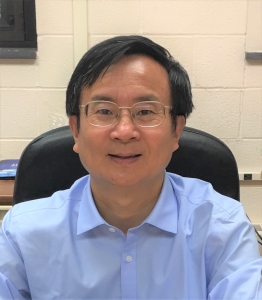 ASPB News is a great way to stay connected with Society members and the broader plant science community. After the celebration of ASPB’s Centennial, we have begun the journey of the next 100 years. At this historic juncture, I feel very honored and fortunate to serve ASPB as a member of the leadership team. I whole-heartedly welcome this opportunity to share my excitement of being part of ASPB and of being a plant biologist.
My interest in plants began in my pre- college years, when I regularly encountered rice, soybean, and many vegetable crops, as well as numerous wild plants, which were found near farmland, along riverbanks, and on wooded hillsides. Parts of many wild plants were used as foods and herbal medicines. These early experiences planted a seed in me that plants are really fascinating and it is wonderful to learn about them. After studying biology and biochemistry in college, I found that plant molecular biology was at its early stages, so I learned molecular genetic tools first using yeast in my PhD studies.
Afterward, I transitioned to studying flower development during my postdoc and have been a plant biologist ever since. It has been a highly rewarding journey, with ASPB being my professional society for nearly 25 years.
As plant biologists and ASPB members, we take part in a multitude of efforts that bind us together because we all care about plants. Plants are important not only because they provide foods and other resources to humans and animals, but also because they are an essential part of our global ecosystems and represent one of the most complex and diverse groups of life forms. ASPB members play crucial roles in advancing these efforts, including being students, educators, researchers in industry and academia, financial supporters, and policy makers in government and non-profit organizations.
One of the reasons now is a great time to be a plant biologist is that there have been so many advances in the understanding of plants, from gene activities responsible for a myriad of plant forms and functions to atomic-scale macromolecular structures, from dynamic cellular processes to plant responses to changing environments, and from eco-physiological interactions to evolutionary innovations and diversifications. These advances have been achieved, in part, by generations of ASPB members, whose cumulative knowledge and insights form a stronger than ever foundation for efforts by current and future plant biologists to understand plants ever more deeply and broadly.
Being a plant biologist today also benefits from the great many available resources, including model systems with a variety of genetic materials for functional studies, more than 1,500 sequenced plant genomes, and hundreds of thousands of transcriptomic datasets. Also important are advances in technologies and computational tools, such as CRISPR-Cas9-mediated genome editing, imaging platforms with greater spatial and temporal resolution and for application in whole-plant phenomics, AI-assisted protein structure predictions, and comparative genomic and evolutionary programs. These resources and technologies enable plant biologists to address increasingly complex questions across all levels of scale.
Indeed, plant biologists today have greater opportunities and responsibility than before to tackle important and complex problems. For instance, knowledge from model systems and crops can be compared with each other and with many other plants to understand general principles as well as specialized structures and processes. Many questions are made even more urgent by global climate changes, increasing human populations, urbanization, and other societal changes. One key question is how to help farmers to have consistent and sustainable harvests when environmental changes cause severe crop losses. Recently, I visited a rice farm in Arkansas, the leading US state for rice production, and had a chance to hear from local farmers. They want to work with plant biologists and plant breeders to find long term solutions, not only new rice varieties but also alternative crops in future years, pointing to a need for the identification of other sustainable crops. Many practical plant questions have led to research that contributes to basic understanding of plant biology and some have resulted in new crop varieties, while others need more research to produce practical solutions. ASPB contributes to the efforts to find solution through advocacy, education, and outreach and by promoting scientific exchange, facilitating collaborations, and building coalitions of academia, industry, governmental agencies and non-profit organization to address complex problems related to plant biology.
There is no doubt that plant biology research has made many key discoveries, while questions remain for plant biologists. We know that fruits and flowers are regulated by genes that are rooted in non-flowering plants and likely benefited from a doubling in the
common ancestor of all flowering plants. However, we do not know how they regulate the wide variety of floral shapes and sizes among over 300,000 flowering plants, not even for representatives of over 400 families or >60 orders. Also, we know that related transcription factors are crucial for bilateral floral symmetry in snapdragon and pea and are needed for cucumber tendril formation; however, the functions of other related transcription factors are unknown in most other plants that have neither tendrils nor bilateral floral symmetry. Generally speaking, we lack the functional knowledge of the majority of genes in even the most extensively studied plants and most plant families do not have practical ways to probe their gene functions.
One way to expand knowledge is to strengthen comparative analyses, often through collaborations. The above mentioned >1,500 sequenced plant genomes cover ≈170 families, including 17 largest families with a total of over 900 genomes. So, genomes of more families need to be sequenced. Nevertheless, the available genome resources can be mined for sequence similarity and possible functional conservation: the genomes from diverse families can help understand broadly conserved functions, while more genomes of large families allow deeper examination of family-specific processes. Moreover, protein structural analyses indicate that structurally and functionally similar proteins need not have similar sequences. This suggest that analysis of protein structural similarities might facilitate functional comparison and predictions; and further investigation in this area might help predict functions of many genes within a species and enhance understanding of functional conservation among plant species.
The complex plant biology problems call for more plant biology research and more people to join the ranks of plant biologists. As ASPB embarks on its second century, it is in a unique position to contribute. With its long- standing tradition in promoting plant biology and supporting members, ASPB can organize members and other stakeholders and leverage its existing conference and publications programs. A core part of the Society’s mission is to promote plant biology as a scientific discipline and to support its members in the pursuit of advances in plant biology. To help members and others to learn cutting edge discoveries in plant biology, the ASPB annual Plant Biology conference showcases over 200 speakers who present broad scientific findings and technological advances.
As plant research has become increasingly complex and heavily reliant on diverse knowledge and methodologies, it is often conducted by collaborating teams with different expertise. In this environment, ASPB’s Plant Biology conferences allow attendees to learn about many different research areas within a few days. In today’s internet age, I can easily find discoveries
in my own research area; however, the ASPB conferences offer opportunities to learn exciting advances that one might not have expected. Plant Biology meetings are important venues for networking and exchange for all careers and career levels. ASPB especially encourages early career scientists to take advantage of the opportunities at the conferences by providing financial support and subsidizing attendance, while more senior members help to make the conference more sustainable.
In addition to the annual conferences, ASPB, together with Oxford University Press, publishes the journals Plant Physiology and The Plant Cell. Also, ASPB, the Society for Experimental Biology, and Wiley jointly publish Plant Direct. These journals are essential in disseminating plant biology knowledge, including contribution from many ASPB members. Both Plant Physiology and The Plant Cell published review articles in celebration of the 100th anniversary of ASPB. These and other articles are great for us to keep up with the advances and provide valuable teaching materials.
Both the ASPB conference and the ASPB journals support the career development of young members, including conference mentoring workshops organized by different sections of ASPB. At the journals, the assistant features editors are great opportunities for graduate students and post-doctoral scientists to gain experience in journal editing and scientific writing. Furthermore, promoting career development of young ASPB members is one of the major goals of fundraising by ASPB and has benefited from long-term ASPB members including the Legacy Society and those recognizing ASPB Pioneers.
 To support ASPB in promoting plant biology and nurturing its members, we need the whole ASPB community to participate. We need our members to encourage their colleagues to join and get involved in society activities. For our early career members, one great way to get started is to come to the regional section meetings and to join the annual Plant Biology conference during graduate studies and post-doctoral training. Young members can also become an early career representative on the ASPB governance committees; applications for the positions will be open in early summer. More senior members are welcome to consider serving as regular members of the ASPB committees by indicating your interest in your member profile; indeed, committee members have been appointed from this group. Some of the ASPB member benefits, such as travel awards for early career attendees and the Summer Undergraduate Research Fellowships are supported in part by fundraising and there is a great need for more funds. All members can support these efforts by making a donation.
Given the progress we have made and the many reasons for even more accomplishments by plant biologists, I cherish the fact that I am a plant biologist today and I am confident that we can all work together to build a great future for ASPB and for plant biology.
Policy Update
Washington on Pause:
Funding, Fallout, and What’s Next
BY ELIZABETH STULBERG, LEWIS- BURKE ASSOCIATES
At the beginning of the new fiscal year, Wednesday, October 1, with no new funding bills or continuing resolution passed by Congress, many agencies within the federal government suspended their services. This is known as a government shutdown. It will end when Congress passes funding bills that reopen the currently-shuttered federal agencies.
The services available during a shutdown depend on where agencies receive funding from and whether that agency’s services are considered essential. For example, the National Science Foundation (NSF) receives its funding from Congress in the form of annual appropriations, and so without those appropriations, it is not allowed to continue operating. On the other hand, certain functions at the Food and Drug Administration (FDA) and Animal and Plant Health Inspection Service (APHIS) receive funding from user fees, and so those funded
services may continue. Air traffic controllers, whose work is considered essential, are also required to work, though they are not paid for the duration of the shutdown.
Certain research and funding-related services have already been suspended. Program managers, for example, will be unavailable, and no new funding opportunities will be announced. However, deadlines posted before the shutdown began will likely remain in effect, and proposals should be submitted via the appropriate portals.
 The end of the fiscal year on September 30 also brought concerns of expiring funding. Indeed, some programs, including the Sustainable Agriculture Research and Education (SARE) program and certain others at USDA’s National Institute for Food and Agriculture (NIFA) have funding that must be disbursed before the end of the fiscal year. Although the NIFA Grant Funding dashboard has not been updated with disbursements for those programs, USDA has reported unfreezing and distributing those funds in advance of the end of the fiscal year. The flagship competitive grants program at NIFA, the Agriculture and Food Research Initiative (AFRI), by contrast, has two-year funding – money appropriated for FY 2025 can be spent in FY 2025 or FY 2026, giving the agency an additional year to make awards.
USDA NIFA was not the only funding agency slow to spend its FY 2025 dollars. Concerns about funding from other agencies also grew towards the end of the fiscal year, but each agency has its own rules for when its funding expires. For example, the Department of Energy (DOE) can use its research funds until they are expended, with no expiration date. By contrast, NSF’s FY 2025 funding expires at the end of the fiscal year, but the money remains available if it has been “obligated,” which means that program managers have designated where the funds will go, for example to a given program, even if proposals have not yet been solicited.
Lewis-Burke will continue to monitor both the status of the government shutdown and the rollout of federal research dollars. Please watch this space for updates, as they become available.
Member News
In Memoriam
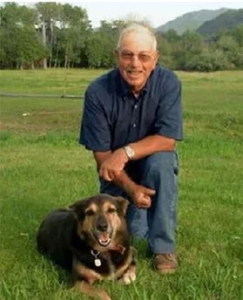
Cleon Walter Ross
In Memoriam: Cleon Walter Ross (1934–2022)
BY RAY BRESSAN, MIKE MILLER, AND NICK CARPITA
Cleon Walter Ross, Professor Emeritus of the Department of Botany & Plant Pathology, later named Department of Bioagricultural Sciences, Colorado State University, died on October 20, 2022, at his home near Victor, Idaho. He spent 33 years on the faculty at Colorado State University. His research centered on nucleotide synthesis and metabolism, and the physiology of growth regulators, but he is most known for his textbook Plant Physiology that he co-wrote with Frank Salisbury. This textbook and its four editions were translated into five languages and was the quintessential text for more than two generations of plant biologists world-wide.
Cleon was born in 1934 during the Great Depression in Victor, Idaho, a village settled in the western foothills of the Teton Mountains. Despite the hard times of that era, he felt fortunate to be raised on his family seed- potato and dairy farm in Victor along the Old Jackson Highway. It was said that Cleon “loved green grass, good grammar, baseball, and hated onions”. The barn Cleon and his dad built with only hand tools when he was 16 still stands today. Cleon was a three-sport athlete in football, baseball, and boxing. He enjoyed fishing, hunting, camping, and riding his horses.
In 1953, Cleon attended Idaho State University in Pocatello, and this college experience sparked an interest in a career in the sciences. He attended Ricks College in Rexburg, Idaho, and then to Brigham Young University, where he graduated from in 1955 with a B. Sci. in Agronomy. Cleon continued with graduate education for a short while at Rutgers University, but he missed his family and the mountains, and returned in the fall of 1957 to attend Utah State University, where he earned his Master’s degree, and then PhD, in plant physiology. He worked with plant physiologist Herman Wiebe on the nature of fluoride injury in plants, showing an increase in pentose phosphate pathway by assaying C6/C1 glucose asymmetric labeling ratios – his first publication in Plant Physiology.
In the fall of 1960, Cleon joined the faculty at Colorado State in Ft. Collins, where he earned a reputation as a great teacher of plant metabolism, seed physiology and plant physiology. These early years were formative for many of Cleon’s students. Mike Miller, an undergraduate at the time, recalls that “Cleon’s Plant Physiology course that gave me an insight into the workings of what being a scientist entailed. Cleon was a naturally gifted writer and lecturer whose flowing but precise style rendered even the most difficult concept easy to understand. Especially edifying for me was the way laboratory exercises were clearly presented. In hindsight I can see that we students were the test subjects for the future laboratory manual Cleon was in the process of preparing for publication. It was these exercises that gave me the confidence that I could have a future in the sciences.” Miller adds that “Cleon took the passion of his younger years in the ring and brought it to the laboratory bench.”
Cleon’s entrance to the plant biology field at Colorado State came with the discovery of the genetic code. His earliest work centered on the biosynthetic pathways of nucleotides. His first publications were on the biosynthesis of uridylic and cytidylic acids from orotic acid and their incorporation into RNA, and the inhibition of uracil synthesis by the inhibitor 6-azauracil. He discovered that orotinide-5-P decarboxylase and pyrophosphorylase was the essential enzyme in the formation of orotidine-5-P from orotic acid and 5-phosphoribosyl-1-pyrophosphate in the formation pyrimidine nucleotides. In another line of investigations, Cleon showed that
ATP was involved in phosphate assimilation and was first to purify ATP-sulfurylase from maize, which forms 3’-phosphoadenosine- 5’-phosphosulfate – the first step in the reduction of sulfur in plants.
Coinciding with the Andrew G. Clark award in 1969 for excellence in research, was the first publication of the textbook Plant Physiology.
The writing of the 1969 edition of Plant Physiology with Frank Salisbury was a major undertaking at that time. It was during this time that Plant Physiology became the focal center for integrating the various domains encompassing the plant sciences. To this end, along with the various revisions of Plant Physiology, the textbook became recognized world-wide as the most comprehensive text in the field of plant physiology. This comprehensive text combined classical physiology of photosynthesis, water relations of growth, transpiration, and translocation, with plant biochemistry of carbon, nitrogen, and sulfur metabolism and the new knowledge of the genetic code. Salisbury and Ross also wrote a well-regarded lab manual to accompany the textbook, where all the experiments included were tested by undergrad students in his lab course. His work ethic set an example for everyone who entered his lab. Mike Miller recalls a conversation with Master’s degree student Joe Miller that Cleon pushed him hard on improving his writing, telling Joe his future success would be directly related to his ability to clearly present his ideas. This was the essence of Cleon.
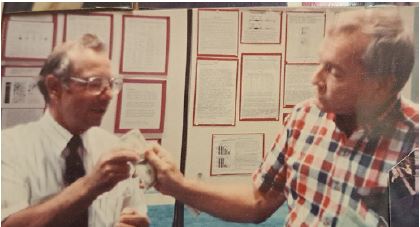
Joe Key settles a bet with Cleon Ross over the existence of c-AMP in plants at the 1982 annual meeting of ASPP in Urbana, IL
In 1972 Cleon took a sabbatical leave to Athens, GA, where he worked with Bob Travis and Joe Key at the University of Georgia. They discovered that red light, through phytochrome, rapidly activated protein synthesis in vitro, which they detected in isolated polysomes. Upon return to Colorado State, Cleon and students Jim Ownby, Mike Murray, and Ray Bressan continued work on nucleotide synthesis. With Joe Key in Georgia, Cleon became interested in the possibility that c-AMP was a second messenger for auxin, which could help explain some of the differences between auxin- and cytokinin- induced growth. After a lengthy effort, Cleon and everyone in his lab concluded that plants most likely, did not use c-AMP as a second messenger. This surprising observation became a decades-long puzzle and dispute within the plant-science community – one that is not completely resolved to this day.
In 1989, Ray returned to Cleon’s lab on sabbatical to help incorporate a description of the rapidly expanding role of molecular genetics in plant physiology as a special chapter in the 1990 edition of his book. Cleon added short biographies of contributors, which became a standard in the later Plant Physiology textbooks of Lincoln Taiz and Eduardo Zeiger. Ray Bressan found Cleon to be exactly as Mike Miller had described him “…a walking / talking version of the book who loved to work hard and play hard.”
Cleon and Mike Murray found that orotinide-5-P decarboxylase and pyrophosphorylase rapidly increased and then declined in the cotyledons of germinating pea seedlings. With Ray Bressan, they characterized a uracil phosphoribosyltransferase resolved from a similar phosphoribosyl-transferase converting orotic acid to orotodine5’-phosphate. With Murray Nabors and his student Nick Carpita, they showed that overcoming dormancy in light-sensitive lettuce embryos involved increases in turgor pressure sufficient to break the tough endosperm within the seed coat. They also showed that gibberellins were likely intermediates in the phytochrome response. As Nick Carpita, relates “Cleon was a voracious reader of scientific literature, which comes with the territory of writing a textbook. Many of his students have marveled at his uncanny ability to pull a copy of any article a student would ask about from a bank of a dozen file cabinets that lined the hallway between his lab and office. For many of his students, our fondest memory of Cleon was in his office almost every night, and many weekend days, either writing, preparing lectures or just talking science with us.”
Upon his return from the University of Georgia, Cleon and his student Albert Huff had begun studies to identify the physiological bases of enhancement of cotyledon enlargement of zeatin and red light. Cleon teamed with David Rayle to compare the growth physics of cytokinin
action compared to auxin induced elongation. [David had earlier teamed with Bob Cleland to formulate the Acid-Growth Theory of auxin action.] Cleon and David found that, like auxin, zeatin-induced expansion relied on wall loosening in addition to increased ability to osmoregulate. The discovered an important distinction that expansion induced cytokinins, by contrast to auxin action, occurred in the absence of acidification.
Cleon retired from Colorado State in 1990 and moved back to a vacation cabin in Victor he built on his parent’s homestead, which became a center for his children and grandchildren to enjoy the high-mountain life of Teton Valley through snowmobiling, hunting, fishing, and riding one of his four saddle horses. His last years were devoted to his favorite hobby of woodworking, building furniture as gifts to his growing family.
Opportunity Alert: #PlantBio2026 Travel Awards
Opportunity Alert!
Funding Travel to Plant Biology 2026
ASPB is competitively awarding a limited number of travel awards to attend Plant Biology 2026, which is scheduled to be held in Ottawa, Canada, from July 18–22, 2026. The travel award program aims to increase attendance of early career scientists at the annual meeting by providing funds for those in financial need. Broadening participation of underrepresented groups to increase diversity and inclusion among Plant Biology attendees is a primary goal.
Undergraduate students, graduate students, postdocs, pre-tenure faculty, and professionals beginning their careers in plant science are also strongly encouraged to apply. Applicants must be members of ASPB; however U.S. residency is not a requirement to apply.
Applications close November 14, 2025.

Welcome New Members of ASPB!
Welcome New Members of ASPB!
Members joining Oct. 1, 2024 through Feb. 1, 2025. Information listed as provided by member.
Nikhil (not provided), South Dakota State University
Sifau Adejumo, University of Ibadan Megan Adler, Oklahoma State University Brian Aguilera, Pennsylvania State
University
Affan Ahmed, University of Louisiana at Lafayette
Aizaz Ali, North Dakota State University Aldo Ricardo Almeida Robles, Institut de
Biologie Moleculaire des Plantes at Centre National de Recherche Scientifique (IBMP- CNRS)
Joseph Amoah, University of Sydney Chelsea An, Rice University
Wagner Araujo Mohammad Aslam, Donald Danforth Plant Science Center
Prameela Awale, University of Missouri- Columbia
Cleopatra Babor
Chase Baerlocher, Washington State University
Yanan Bai, The University of Texas at Austin Kelly Balmant, University of Florida
Laura Beaton, York College, CUNY Manuel Bellucci, Purdue university
Philip Bevilacqua, Pennsylvania State University
Annapurna Bhattacharjee, Indian Institute of Technology Delhi
Emmanuel Biney, University of Nebraska, Lincoln
Aleca Borsuk, New York Botanical Garden James Bradley, Dept. Cell and Systems
Biology, University of Toronto Alex Canto-Pastor, Yale University Filippo Censi, Bologna University
Chunoti Changwal, Iowa State University
Soyeon Choi, Stanford University Emily Corbridge, Washington State University
Madison Creach, Michigan State University
Leonidas D’Agostino, Texas Tech University
Giuseppe Dalessandro, Università del Salento
Linkan Dash, Corteva Agriscience Agata Daszkowska-Golec, University of Silesia in Katowice
Elisa De Meo, Sant’Anna School of Advanced Studies
Shania Dean-Motley, Tennessee State University
Natalie Dietz, University of Montana Shikha Dixit, Colorado State University Gabriela Doria, Universidad EAFIT
Koy Dudley Madhushree Dutta Kelsey Eglinton
Amarachi Ejimadu, Principia Collage
Sara El Alaoui, San Francisco State University
Chinechendo Eze, University of Louisiana at Lafayette
Ann Feke, Michigan State University Yu Feng, University of Florida
Laura Fernandez De Una
Idrice Carther Kue Foka, Rutgers University Neethu Francis
Danielle Gafford
Nilesh Gawande, Indian Institute of Technology Gandhinagar
Katelyn Gianni, Minnesota State University, Mankato
Jerry González-Cantoral, University of San Carlos of Guatemala
Carlos González Sanz
David Goodstein, Joint Genome Institute Yangnan Gu, University of California, Berkeley
Jeff Habig, Simplot
Tanushree Halder, Sher-e-Bangla Agricultural University
Drew Hall, University of British Columbia Gabrielle Hartill, University of Tasmania Rajnee Hasan, University of Nebraska Lincoln
Olivia Hazelwood
Jia He, Cold Spring Harbor Laboratory
Claudia Helena, Sierra Nova
Jiyeon Hyun, University of Utah
Lenka Helusová, Institute of Experimental Botany, CAS CZ
Brittani Herron, University of Tennessee
Ziliang Hu, VIB – UGent Center for Plant Systems Biology
Benjamin Hubbell
Toyosi Ijato, Bayer Crop Science
Irene Ikiriko, University of Delaware
Hrishikesh Ingole, Clemson University
Lani Irvin, University of Northern Colorado
Saiful Islam, Iowa State University
Kommineni Jagadeesh, Professor Jayashankar Telangana Agricultural University
Seong-Nam Jang
Gagan Jeet, Clemson University
Lingxiao Ji, University of Michigan
Yunqing Jian, University of Michigan
Isaiah Kaufman, Michigan State University
Avninder Kaur, University of Florida
Alyssa Kearly, Boyce Thompson Institute
Rachel Kerwin, Michigan State University
Amin Khan
Mamoona Khan, University of Bonn
Mst. Muslima Khatun, National Institute of Biotechnology, (NIB)
Francis Kiemo, Mississippi State University
Chanhong Kim, Chinese Academy of Sciences
Eundeok Kim
Sung-Il Kim, University of Michigan
Koichi Kobayashi, Osaka Metropolitan University
Elise Krespan, Syracuse University
Yee-Shan Ku, The Chinese University of Hong Kong
Anil Kumar, Iowa State University
Pawan Kumar, The University of Chicago
Rohit Kumar, Clemson University
Katarina Kurtovic
Kyounghee Lee, University of Utah
Travis Lee
Jian-Feng Li
Yebei Li
Irene Lichtscheidl
Erin Lincoln, Merrimack College
Cheng Liu, University of Florida, Gainesville
Guangchao Liu, Molecular, Cellular and Developmental Biology, University of Michigan MCDB
Qingcai Liu
Yuanyuan Liu, Fujian Agriculture and Forestry University
Silvia Manrique
Antony Maodzeka, University of Illinois Urbana-Champaign
Lynnicia Massenburg
Mrinmoy Mazumder, National University of Singapore
Lavanya Mendu, USDA-ARS
Benjamin Merritt, University of Florida
Malini Mk, Smith College
Devasantosh Mohanty, University of Missouri, Columbia
Abdollah Monfared, Texas Tech University
Maximillian Munro, University of Florida
Youzheng Ning, University of Cambridge
Medha Noopur
Ekene Obih, The University of Arizona
Ciara O’Brien, John Innes Centre
Damilola Olofintuyi, Texas Tech University
Enameguono Olomukoro, Purdue University
Kate Olson
Nathaniel Oragbon, University of Ibadan
Jamie O’Rourke, USDA-ARS
Xavier Ozowara, Virginia Tech
Sonam Pahuja, University of Delhi
Rajni Parmar, Tennessee State University
Nijhum Paul, North Dakota State University
Samantha Pelletier, University of Minnesota, Saint Paul
Seline Pons
Ved Prakash, Kansas State University
Nibedita Priyadarshini, University of Freiburg
Ebenezer Quandoh, Clemson University
Rini Rahiman, National University of Singapore
Christine Raines
Wenyi Ran, Yale University
Gaurav Raturi, Texas Tech University
Manoj Kumar Reddy Allam, Mississippi State University
Elizabeth Regedanz, USDA-ARS
B. Jazmin Reyes-Hernandez, University of Copenhagen
Asad Riaz, The University of Queensland
Rachel Rivero, University of Michigan
Violet Sackett, Yale University
Iman Saha, Iowa State University
Miriam Nancy Salazar Vidal, University of Missouri
Yu San (Emma) Hui
Asha Sastya, French Associates Institute for Agriculture and Biotechnology of Drylands, The Jacob Blaustein Institutes for Desert Research, Ben-Gurion University of the Negev, Israel
Shinichiro Sawa, Kumamoto University
Rakefet David-Schwartz, Agriculture Research Organization, Volcani Institute
Maya Sealander, University of Missouri
Adam Seluzicki, HHMI / Salk Institute for Biological Studies
Caterina Selva, The University of Adelaide Sara Shakir, INRAE
Sonali Shedge, University of Wisconsin Milwaukee
Qiaochu Shen, University of Michigan
Eva Mei Shouse, University of North Carolina
Bushrana Siddique, East Tennessee State University
Shikha Singh, Indian Institute of Science Education and Research Pune, India
Alexander Steiner, University of Vermont Udaya Subedi
Anne Sylvester
Vandana Thakral, West Virginia State University
Hannah Rae Thomas, Zhejiang University Franziska Turck, Max Planck Institut für Pflanzenzüchtungsforschung
Gulzar Ullah, Pakistan Agricultural Research Council
David Usak, Institute of Experimental Botany, CAS CZ
Tanishka Uttam
Karina Vega-Escobar, University of Puerto Rico
Sowmiya Devi Venkatesan, Purdue University
Anne-Marie Viens-larin, Bishop University
Annie Voss, Pitzer College
Yuchen Wang, University of Illinois, Urbana- Champaign
Yunqing Wang, California Institute Of Technology
Heshini Navodya Weerakkody, Texas State University, San Marcos
Visna Weerarathne, Grape Genetics Research Unit, USDA-ARS at Cornell-CALS
Ethan Weiner
Erin Wiegman, University of Maryland, College Park
Mary Wildermuth
Robert Witkowski, Pennsylvania State University
Yushi Xia, Yale University
Peiqiao Xie, Cornell University
Yingpeng Xie, University of Michigan
Suji Ye, University of Michigan
Andrea Zanini, Donald Danforth Plant Science Center
Na Zhang, China Agricultural University
Ning Zhang, Shandong Agricultural University, China
Ruize Zhang
Mingxi Zhou
Yulu Zhou, University of Michigan
Features
Coastal Ecologists Race to Understand One of the Fastest-changing Landscapes on Earth
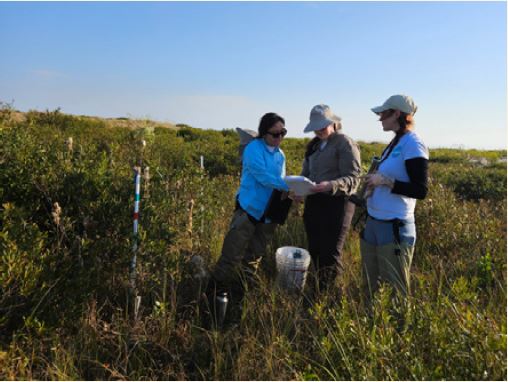
Students in the Woods lab are conducting field work on Hog Island, VA, where woody shrubs are encroaching into grasslands. (Image courtesy of Natasha Woods)
Coastal Ecologists Race to Understand One of the Fastest-changing Landscapes on Earth
BY BEN LONG
Just a few years ago, Natasha Woods was studying an island off the coast of Virginia.
Now, that island is in pieces.
Woods’ research is centered around coastal ecosystems, where organisms and even the land itself is constantly in flux. Barrier islands, dunes and wetlands are incredibly complex systems, but the effort to understand — and preserve them — has heightened in recent years.
Climate change is expected to increase both sea level rise and tropical storm frequency and severity, posing an imminent threat to the almost 30% of Americans that live on or near a coastline. Coastal ecosystems, particularly coastal plants, are the first and perhaps most effective defense these communities have against devastating storm surges. And yet,
the jury is still out on how these important plant communities are going to hold up amid rising sea levels and more regular battering by hurricanes.
So, what can humans do to mitigate these impacts and protect coastal communities? It’s a question at the heart of an emerging interdisciplinary field called coastal resilience, where studies in ecology and engineering often go hand in hand.
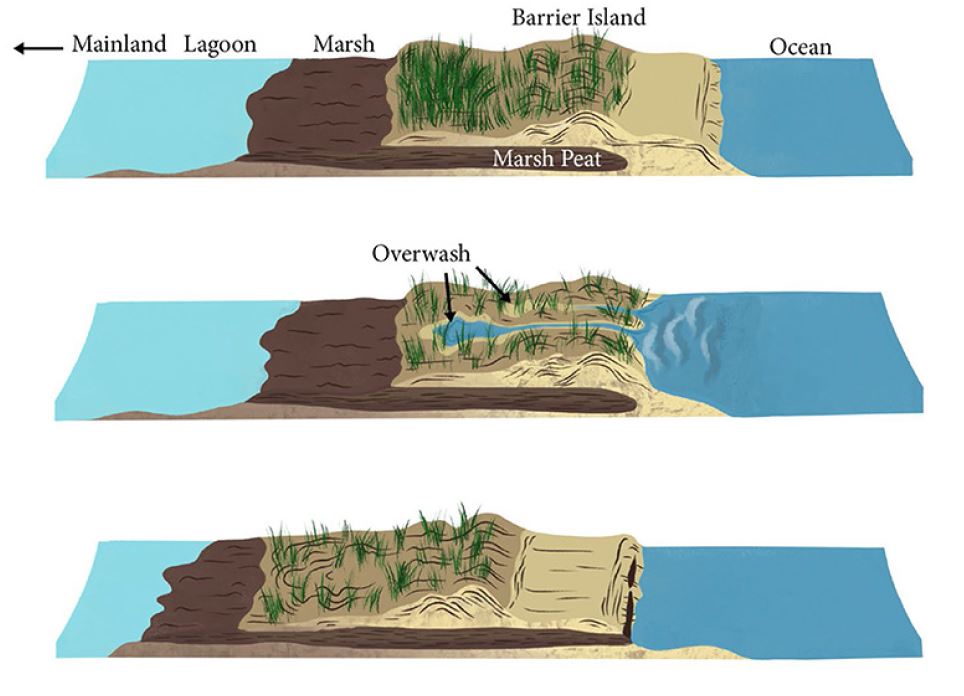
Overwash occurs when sand washes over the dunes and into the island interior. High waves can push water over dunes, carrying sand from the beach to the middle of the island and sometimes into the marsh behind the island. Over time, this process can help barrier islands move toward the mainland and stay above rising sea levels. (Graphic courtesy of Julia Yee, adapted from Riffe et al. 2024)
Woods, an assistant professor at Moravian University, studies shrub encroachment and dune dynamics on the Virginia Coast Reserve, a group of barrier islands about 40 miles northeast of Virginia Beach. It includes Cobb Island — the one that recently fragmented —and serves as a long- term ecological research station focused on predicting how coastal systems will respond to climate change.
The plant growth on these barrier islands normally consists of a highly stable “core” of relatively salt-sensitive shrubs like wax myrtle that are sheltered by the outer dune communities dominated by grasses and other salt-tolerant species.
However, Woods has noticed the warmer winters of recent years have allowed the woody shrubs to become more aggressive, taking over some of the dune communities. This may sound like a good thing for island stability, but grasses are essential to maintaining the balance between island building and erosion due to their ability to capture and hold sand.
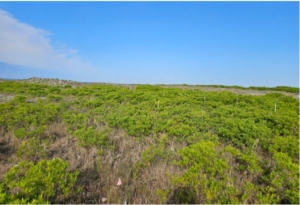
An area on Hog Island being taken over by the shrub Morella cerifera
that was previously
dominated by grasses. (Image courtesy of Natasha Woods)
“Islands need to roll over,” Woods explained. “They actually need the grasses that loosely hold the sediment so that they can transgress toward the mainland or progress toward the ocean.”
As these islands become more dominated by shrubs, their capacity to build is lowered. Julie Zinnert, an associate professor at Virginia Commonwealth University, also works on the Reserve studying coastal erosion.
“[When you have] a lot of woody vegetation, there’s more erosion that’s occurring because sediment can’t really move to the interior,” Zinnert explained. “If [an island] is in a low- lying elevation and doesn’t have the capacity to build, eventually it will drown.”
Woods suspects a combination of sea level rise and shrub encroachment caused Cobb Island to fragment a few years ago. Now her team is monitoring the same processes at work on another barrier island, Hog Island, hoping to catch them in real time.
“We call these high-speed landscapes for a reason: you never know what’s going to happen and what you’re gonna get,” Woods said.
A couple hundred miles to the south, another team is assessing how ecological work like that at the Virginia Coastal Reserve can be used to inform engineering and policy decisions. Siddharth Narayan, an assistant professor at East Carolina University, studies ecosystem-based adaptation: a strategy for addressing climate change that focuses on leveraging existing natural systems. It’s a framework that’s gaining traction, especially in coastal areas where humanmade structures like seawalls and jetties are being pushed to their limit by increasingly ravaging storms.
Both Narayan and the ecologists agree: the most effective and lasting defense coastal communities have against hurricanes and the like is their existing native vegetation.
“We’re used to adaptation where we build walls,” Narayan said. “Or structures, or levees. But those things are not dynamic; they’re not evolving through time. With ecosystem-based adaptation, we’re dealing with a strategy that itself is evolving.”
Plant communities like salt marshes, mangrove wetlands, and barrier islands have evolved alongside storms for millions of years and can naturally buffer and recover from hurricanes. Unfortunately, rampant coastal development and poor management practices like changes in freshwater inputs or roads cutting off tidal flows have rendered many of these ecosystems less effective.
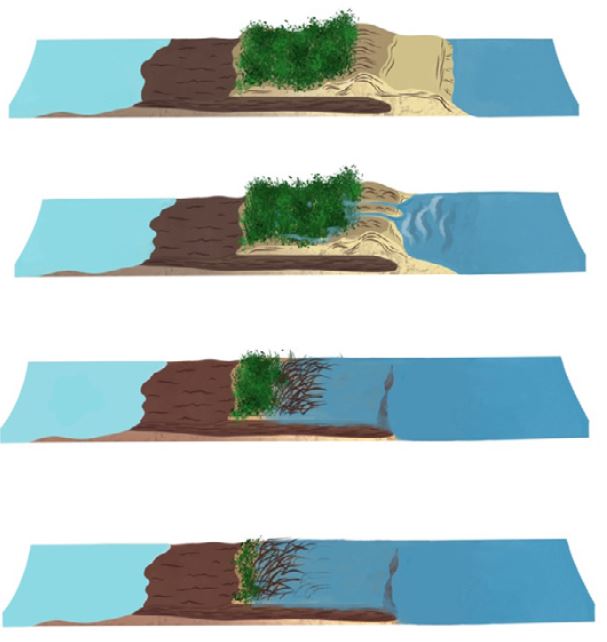
If an island’s building process is interrupted, either by shrub encroachment or human activity, erosion will dominate, sediment will be lost, and the island may drown. (Graphic courtesy of Julia Yee)
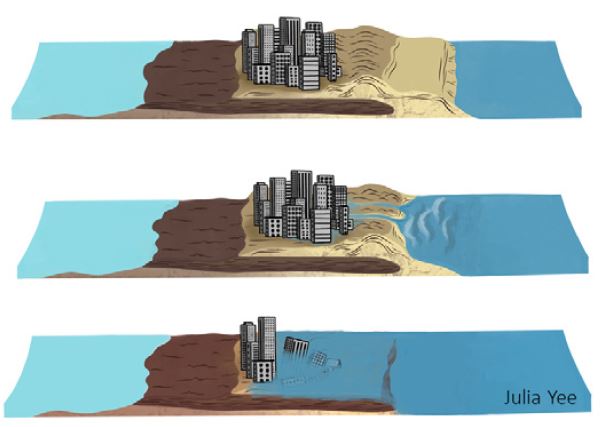
Human structures such as buildings and jetties can interrupt elevation building of islands and coastlines and exacerbate erosion. (Graphic courtesy of Julia Yee)
“When these systems are not healthy … it increases their vulnerability to storm impacts,” Narayan explained. “So when they are damaged more from storms or not recovering as fast, this has a knock-on effect in terms of what happens to the people behind them during the next one.”
Narayan emphasizes that, rather than try to build something from scratch, people should work to properly identify, understand and restore these natural habitats. That includes research like Woods’ and Zinnert’s, which may offer clues as to how barrier islands and other dune ecosystems can be best managed to increase their resilience. Their data is also valuable for models, which can be used by policymakers or land managers to better predict the effects of climate change on coastal settlements.

Adaptation to climate change may involve losing some humanmade structures to sea level rise and storms. These seaside houses in the Outer Banks of North Carolina have been ravaged by the encroaching shoreline and erosion. (Image by National Park Service)
Woods shakes her head. She recounts one of her more recent visits to Cobb Island, where she was taken completely by surprise.
“When I started out working on these islands for my post-doc, I would’ve said it was going to continue to erode, but when I got the opportunity to go back … it was amazing,” Woods said.
Despite the severe erosion she had observed in years past, Cobb had begun to accrete rapidly on the south end — the island was rebuilding itself.
Coastal ecosystems are some of the most rapidly changing (and unpredictable) environments in the world. As these habitats continue to respond to the many effects of climate change, they are sure to offer scientists not only an exciting window for study, but also an opportunity to cooperate with engineers and policymakers to truly make a difference.
With the right management and knowledge, these chronically underestimated ecosystems will continue to offer their services to coastal communities for centuries to come.
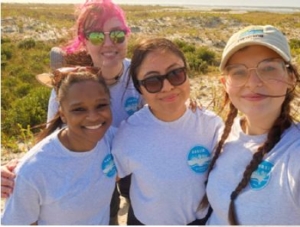
Natasha Woods (front row left) stands smiling with her students at one of their field sites on the Virginia Coast Reserve (Front row from right to left: Bria Bartholomew, Giselle Ponce. Back row: Brianna Whalen). (Image courtesy of Natasha Woods)
Plant Scholars: Grant Funds Enhance Connectivity
Plant Scholars: Grant Funds Enhance Connectivity
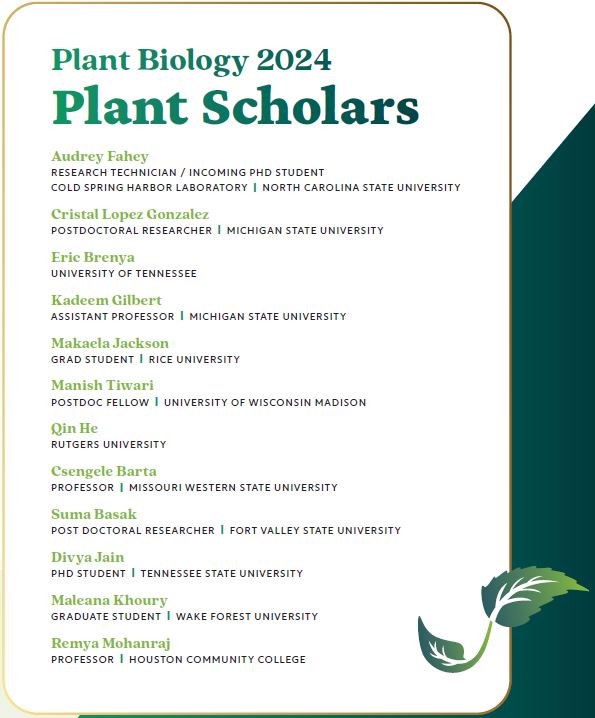
The 2024 conference grant, “Plant Biology Scholars Program: Supporting exceptional talent to solve 21st century agricultural problems,” funded by the NSF, aimed to strengthen and diversify the plant science workforce by addressing the loss of talent at key stages along education and career pathways. The program’s goals were to raise awareness of the plant sciences among the public, collect feedback about how ASPB can further support plant scientists at diverse career stages, and to break down barriers at conferences. The funds were used to support the science outreach at the Plant Science Saturday event in Honolulu, Hawai’i, and to pilot the Plant Scholar program, including a travel award specifically for Plant Biology 2024 and regional ASPB section meetings that took place in Spring 2025.
Plant Science Saturday enables members of the plant science community to serve as advocates for the profession by demonstrating the importance of plant science to the public. By participating in hands-on activities at an established farmer’s market close to downtown Honolulu, families engaged with scientists to spark curiosity and build awareness of how plants positively impact economies, environments, and health. Plant Science Saturday has proven to be an exciting opportunity for community engagement and has given ASPB the ability to directly promote plant awareness, the importance of plant research, and the opportunities in plant science careers. It has also inspired and energized plant scientist volunteers to similarly engage in their own communities.
The Plant Scholar program created cohorts of constituents that are under-represented
in plant biology across multiple axes of diversity (gender, racial/ethnic identity, institution type, etc.) at traditionally “leaky” transition points in research education and career pathways. By connecting diverse plant scientists from all career stages, the
program facilitated professional relationships that improved individual success, retention in plant science, and research productivity. Understanding that ASPB’s Plant Biology conference draws a broad global audience and that regional meetings, by contrast, attract people from a more localized area, the Plant Scholars program was designed to intentionally reach both groups.
At Plant Biology 2024, the Plant Scholars met virtually prior to the conference and also met in-person on the last day of the conference. The pre-conference meeting enabled them to arrive at the conference knowledgeable about the program and provided them with a core community to interact with at the conference. During the concluding in-person meeting, a facilitated discussion was used to collect feedback from the scholars, providing ASPB leadership with key insights into ways that the conference and other ASPB activities might address the core reasons that people leave the profession.
Through the NSF grant and additional funds from a previous grant, ASPB was able to fund elements of Plant Science Saturday and support registration and travel for 12 Plant Scholars at Plant Biology 2024. The grant also provided smaller travel awards for attendance at regional section meetings and support for regional coordinators who facilitated connection and collected feedback at the regional meetings in parallel to the conference events. Additionally, the grant included funding for a community-wide survey that will help inform future programming for the society. ASPB is committed to continuing to work with funding agencies to find ways to address the diverse needs of all our members.
The Primary Investigator of the grant is Crispin Taylor (ASPB CEO), and the Co-Primary Investigators are Amanda Storm (Western Carolina University) and Erin Friedman (University of Lynchburg).
Hear from the 2024 Plant Scholar Awardees
“I applied for the Plant Scholar Awards because the program provided the opportunity for researchers like myself to attend Plant Biology 2024. The support from the Plant Scholar Award made this opportunity accessible and gave me the platform to elevate the impact of my work. I met the criteria for the Plant Scholar Awards through my research proposal, which addressed a critical environmental issue: conservation of native plant species. Additionally, my academic background, extensive research experience in plant biodiversity, and my commitment to fostering sustainability through scientific innovation made me a strong candidate for this award. The primary benefit of receiving the Plant Scholar Award thus far has been the validation of my research question and its potential impact. Also, attending Plant Biology 2024 has provided me with new perspectives, feedback
from peers and mentors, and access to advanced tools and techniques.”
— Remya Mohanraj
“I applied for Plant Scholar Awards because I would attend the Plant Biology 2024 conference in Honolulu, Hawaii and present a poster. This award provides me with the funds for conference registration and travel fees which makes the trip easier for me. Besides the amazing conference, the Plant Scholar Awards gave me the opportunity to communicate more with other awardees.”
— Qin He
Society News
Underlining the Importance of the joint SMB/ASPB Meeting for Young Mexican Scientists

Underlining the Importance of the joint SMB/ASPB Meeting for Young Mexican Scientists
The 21st Sociedad Mexicana de Bioquímica (Mexican Society of Biochemistry, SMB) Plant Biology Congress and 4th ASPB Mexico section meeting will be held in Mérida, Yucatán from October 20-24, 2025. The Plant Biochemistry and Molecular Biology branch of the SMB organize the meeting biannually and the first congress organized by the branch in 1995 combined the 7th annual Plant Biochemistry and Molecular Biology congress with the first Mexico-USA symposium on Plant Biochemistry and Molecular Biology. This format where approximately half of the program is made up of speakers from leading plant biology/molecular biology laboratories in the US has proved to be extremely successful especially for younger scientists, postdocs, graduate and undergraduate students since it provides direct access to leading scientists and the latest developments in the field. Whereas most (if not all) other national congresses in are conducted mainly in Spanish, the Plant Biochemistry and Molecular Biology branch meetings are conducted completely in English and this provides an opportunity for Mexican students to gain confidence in presenting posters, short “flash talks” or participating in discussions and networking in English (many young Mexican scientists have been accepted as postdocs in research groups in the US due to these interactions). This represents an enormous advantage giventhat budget cuts, restrictions in travel spending associated with Mexican government grants and more recently restrictions or long delays in obtaining US visas are making it increasingly difficult for young scientists to travel to meetings in the US. The importance of these interactions was recognized by the formation of the Mexico Section of the ASPB and the 1st joint meeting in 2019. The support and promotion of the joint meetings by ASPB is fundamental for their continuing success and is perhaps a formula that could be replicated to benefit young scientists elsewhere in Latin America or in other regions. On the other hand, increasing the participation of graduate students and/or young postdocs from US institutions would also enrich the meetings. The full program and details of the 21st Plant Biology Congress and 4th ASPB Mexico section meeting can be found at https://mexico.aspb.org. We look forward to seeing you in Mérida.
Update from ROOT & SHOOT
Update from ROOT & SHOOT
 Following on the recommendations of the Inclusive Conferences Working Group (ICWG), ROOT & SHOOT provided onsite ombud services at two conferences in 2024, the Maize Genetics meeting and ICAR 2024. In alignment with the ICWG recommendations, the ombuds are also developing an accountability process for using non-punitive ways of addressing harm in the plant science community. ROOT & SHOOT will again host Bystander Intervention Trainings in 2025; look for announcements in The Signal newsletter or sign up to the ROOT & SHOOT mailing list.
The Mentoring Working Group, with support from CIMER, has developed a detailed, 13-week curriculum for an online, cohort-based training, which is currently in alpha testing. The first week is an introduction to the program, followed by six weeks of structured engagement (three topics, each for two weeks). Each week’s program includes detailed learning objectives and assessment criteria, pre- reading and reflection, group discussion and group activities. This is followed by a three-week gap during which participants will reflect on their learning and write a mentoring statement. During the final three weeks the groups will reconvene to share their mentoring statements and experiences. The training will be provided at no cost to the plant biology community starting in summer 2025.
Want to get involved or be among the first to hear about opportunities available through ROOT & SHOOT? Please sign up for our mailing list to be alerted to future progress and opportunities.
 Tell us what you think!
The ASPB News strives to meet members’ needs and interests. To ensure the publication continues to evolve along with ASPB members, please take just a few minutes to answer five questions about the ASPB News. We’ll use the information to help shape future issues and the overall publication going forward.
Take the survey: https://qrco.de/bdFEHu